Wood Movement & Seasonal Expansion: Desk & Furniture Rules
Understanding tangential, radial, and longitudinal movement in solid wood desk tops and how to prevent warping.
Giang Nguyen
Wood Manufacturing Expert
The Dynamic Nature of Wood
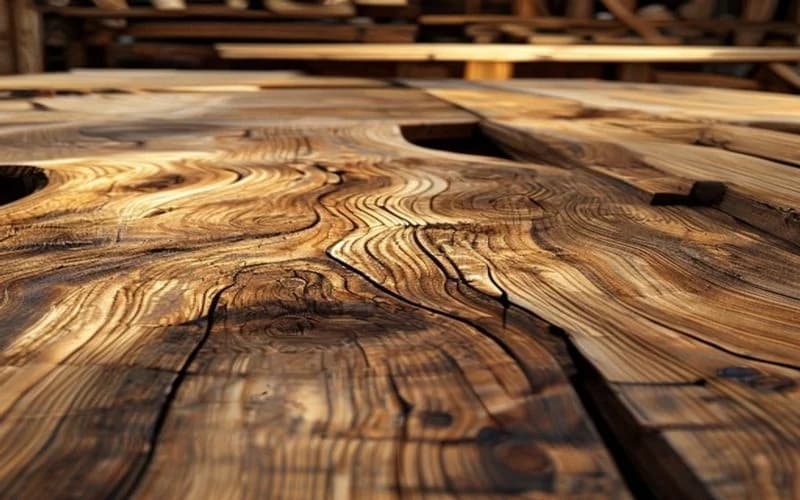
Solid wood is hygroscopic. It behaves like a bundle of straws, constantly absorbing moisture from humid air and releasing it back into dry air. This moisture exchange causes wood to expand and contract across its grain, a phenomenon known as wood movement.
Failure to account for wood movement when mounting a desktop to a standing desk frame is the #1 cause of cracked surfaces and warped boards.
Three Axes of Movement
Wood moves differently in three directions:
- Tangential (across the growth rings): The greatest amount of movement. Solid wood tops can expand or contract up to 1/4" across a 30" wide surface.
- Radial (along the growth rings): About half the movement of tangential.
- Longitudinal (along the grain): Negligible (usually less than 0.1%).
Solid Wood vs. Plywood Stability
This is where plywood holds a massive engineering advantage. In plywood, thin plies are glued together with alternating grain directions (cross-lamination). When one ply attempts to expand across its grain, the plies above and below it run lengthwise, holding the board stable. Plywood's seasonal movement is virtually zero.
Tips for Solid Wood standing Desks
- Use Slotted Screw Holes: Never screw a solid wood top directly into circular frame holes. Use elongated slots to allow the desk top to expand and contract without restriction.
- Seal All Sides Equally: When applying varnish or polyurethane, coat both the top and bottom of the desktop equally. If you only seal the top, the bottom will absorb humidity faster, resulting in cupping.
Want to see our testing in action?
Browse our expert-tested standing desk reviews with real lab data.
Explore Reviews