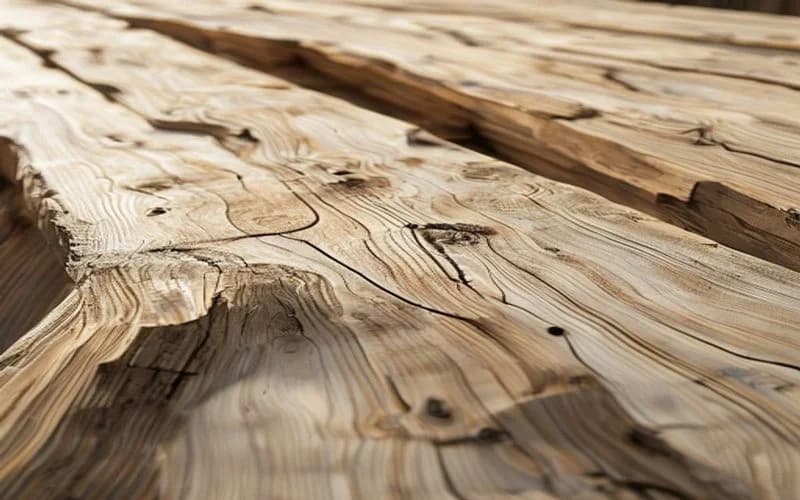
White Oak Veneer Plywood: Premium Grades, Cuts, and Architectural Uses
The definitive guide to White Oak plywood. Learn why this gold-standard veneer outclasses Red Oak in moisture zones and how to specify rift-sawn cuts.
Giang Nguyen
Wood Manufacturing Expert
The Architect's Darling: Why White Oak Rules
White Oak (*Quercus alba*) is currently the king of architectural woodworking. Its subtle golden-wheat color tone, clean modern aesthetic, and natural durability make it the first choice for high-end custom cabinetry, millwork, and furniture. But White Oak plywood is a premium product with a price tag to match.
To work with it without wasting money or ruining sheets, you must understand its unique cellular structure, the importance of cut angles, and how its high tannin content affects color matching and finishing. Let's look at what makes White Oak plywood the benchmark of modern custom woodwork.
Cellular Anatomy: The Tyloses Advantage
White Oak has a secret weapon that Red Oak lacks: tyloses. At a microscopic level, White Oak is a ring-porous hardwood with large vessels that transport water when the tree is alive. As the heartwood matures, these vessels become clogged with balloon-like crystalline structures called tyloses.
This plugging makes White Oak heartwood virtually impermeable to water. Liquid water cannot travel through the wood pores. This is why White Oak is used to build whiskey barrels, wooden boats, and outdoor decks. In plywood form, this makes White Oak veneer vastly superior for kitchen and bathroom vanities where occasional splashing occurs. Red Oak's open pores will act like drinking straws, pulling moisture deep into the veneer and causing black rot stains; White Oak resists this moisture intrusion.
Physical and Mechanical Specifications
White Oak is heavier, harder, and stiffer than Red Oak, making it exceptionally durable for high-traffic cabinet installations:
| Technical Property | White Oak Veneer Plywood | Red Oak Veneer Plywood | Yellow Birch Veneer Plywood |
|---|---|---|---|
| Density (kg/m³) | **680–750** | 620–680 | 600–650 |
| Janka Hardness (lbf) | **1,360** | 1,290 | 1,260 |
| MOR (Strength - MPa) | **102** | 98 | 85 |
| MOE (Stiffness - MPa) | **12,300** | 11,200 | 11,500 |
Specifying Rift-Sawn vs. Plain-Sliced vs. Figured Veneers
When ordering White Oak plywood, the "cut" is everything. The visual difference between plain-sliced and rift-cut White Oak is so dramatic that they look like different wood species:
Rift-Sawn White Oak (The Modern Standard)
Rift cutting slices the log at a 15-degree angle to the growth rings, minimizing the silver-colored ray flecks (medullary rays) that occur in quartered cuts.
- Look: Narrow, ultra-straight, parallel grain lines. It is incredibly clean, consistent, and lacks cathedral arches.
- Use: Modern high-end kitchens, minimalist furniture, and vertical paneling. This is the most expensive cut because it yields the least veneer per log.
Plain-Sliced White Oak (The Classic Look)
- Look: Bold, sweeping cathedral arches in the center with straight grain on the sides. It looks like traditional solid wood lumber panels.
- Use: Traditional cabinetry, rustic built-ins, and classic furniture.
Quarter-Sawn White Oak (The Craftsman Look)
Slicing directly perpendicular to the growth rings exposes the medullary rays.
- Look: Dramatic, reflective silver flakes and ribbons running across the straight vertical grain lines. This ray fleck is the hallmark of classic Mission-style and Craftsman furniture.
[CTA BUTTON: Check Current Price on Amazon]
The Tannin Danger: Rust and Discoloration
White Oak is packed with tannic acid. This natural chemical compound protects the tree from insects, but it creates major headaches in the woodshop. When tannic acid comes into contact with iron and water, a chemical reaction occurs that creates a deep, permanent blue-black stain. This is called iron-tannate staining.
If you use steel wool to prep White Oak plywood, or if you use standard steel clamps directly on a wet glue joint, you will leave black stains in the wood that cannot be sanded out. Always use plastic or wood clamping pads, and swap steel wool for synthetic abrasive pads (like Scotch-Brite). If you do get iron staining, the only way to remove it is by bleaching the wood with an oxalic acid solution.
Sanding and Finishing White Oak Plywood
Because White Oak veneer is thin (typically 0.5mm on domestic panels), you have very little margin for error during sanding. If you burn through the veneer with a power sander, you will expose the glue line and ruin the entire sheet. Use a random orbital sander with a soft interface pad, run it on medium speed, and never press down. Let the weight of the sander do the work.
Choosing the Right Finish
White Oak has a tendency to turn amber or orange when oil-based polyurethane is applied. If you want to preserve the raw, natural, light-wheat look of the wood, use a water-based polyurethane containing UV inhibitors (like General Finishes High Performance or Loba 2K Invisible). Alternatively, apply a washcoat of white-tinted sealer before clear-coating to counteract the natural darkening of the wood fibers.
Common Questions
How do I tell Red Oak and White Oak plywood apart?
If you cannot tell by the color (White Oak is tan/wheat; Red Oak is pinkish), look at the wood rays on the face. White Oak has long, continuous wood rays that are usually longer than 3/4 inch. Red Oak has short, broken wood rays that are rarely longer than 1/2 inch. You can also apply a chemical test using a sodium nitrite solution, which turns White Oak dark green/black but has no effect on Red Oak.
Is White Oak plywood suitable for outdoor furniture?
No. While solid White Oak lumber is highly decay-resistant, the plywood panel is not. Rain and humidity will penetrate the glue lines, causing the thin face veneer to buckle, delaminate, and peel. The softwood core plies will rot quickly if they get wet. Keep White Oak plywood indoors.
Why is White Oak plywood so expensive?
High demand and limited supply. The popularity of modern rift-sawn White Oak in high-end architecture has driven up the price of premium logs. Producing rift-sawn veneer is a low-yield process, meaning more waste and higher prices for the finished panels.
Bottom Line
White Oak veneer plywood is the gold standard of modern cabinetry. Its tyloses-filled cells resist moisture, while its rift-cut grain offers a clean, straight aesthetic. Work with care: protect it from iron contact, sand with a light touch, and choose your finish wisely to preserve its beautiful natural color.
[CTA BUTTON: Check Current Price on Amazon]
Want to see our testing in action?
Browse our expert-tested standing desk reviews with real lab data.
Explore Reviews