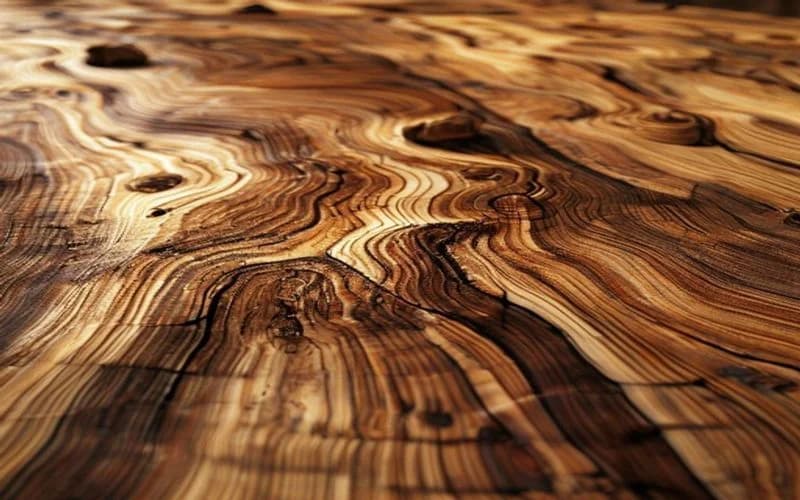
Walnut Veneer Plywood: Heartwood vs. Sapwood and Finishing Techniques
Walnut plywood is a high-cost, high-reward material. Master the details of sapwood grading, steaming, UV color shifts, and how to finish walnut without losing its depth.
Giang Nguyen
Wood Manufacturing Expert
The Dark Royalty of Fine Woodworking
Black Walnut (*Juglans nigra*) is the ultimate premium hardwood of North America. Its deep chocolate tones, complex grain figures, and warm, sophisticated luster make it the undisputed choice for custom office furniture, executive desks, and high-end built-ins. But Walnut plywood is one of the most expensive panels you will ever buy. A single 3/4-inch sheet of A-grade plain-sliced walnut can easily cost $120 to $180.
Working with walnut plywood requires a level of precision that matches its price tag. The wood has a stark contrast between heartwood and sapwood, it shifts color dramatically under sunlight, and its open-grained structure requires specialized finishing to achieve its famous depth. Let's unpack the material science of Walnut plywood faces so you can build with confidence.
Heartwood vs. Sapwood: The Grading Trap
A walnut log has two distinct color zones. The heartwood (the older inner wood) is rich chocolate-brown. The sapwood (the younger outer wood) is creamy-white.
In solid walnut lumber, sapwood is often cut away or hidden. But in veneer slicing, mills want to maximize yield, so they slice the entire log, resulting in strips of white sapwood running down the edges of the veneer leaves. If you are not careful when buying walnut plywood, you will end up with sheets that have ugly white stripes running across the dark face. Here is how the HPVA grades address this:
| HPVA Grade | Heartwood Mandate | Sapwood Allowance | Color Uniformity | Best Use |
|---|---|---|---|---|
| **A (Premium)** | **90% Minimum** | Max 10% on edges | Excellent, matched | Clear-finished cabinet faces, desks |
| **B (Good)** | **80% Minimum** | Max 20% | Good matching | Shaker doors, premium shelving |
| **C (Sound)** | No minimum | Unlimited | High contrast | Drawer boxes, cabinet interiors |
If you want a solid, deep chocolate-brown panel, you must specify A-grade Heartwood Walnut. If you buy a budget sheet, you are getting sapwood that the mill has dyed or stained at the factory to look like heartwood — a fake coloration that looks flat and muddy under a clear coat.
The Steaming Process: Why Import Walnut Looks Grey
To minimize the visual difference between white sapwood and dark heartwood, many commercial mills steam the walnut logs before slicing the veneer. The logs are placed in steam vats at 180°F to 200°F for several days. This process liquefies the dark pigments in the heartwood and forces them out into the sapwood, darkening it to a grey-brown.
While steaming increases veneer yield, it comes at a major cost to wood beauty. Steaming destroys the natural purple and red highlights of walnut, leaving the entire sheet looking a slightly uniform, muddy grey. High-end architectural mills offer unsteamed walnut plywood, which retains the vibrant natural color variations, but it requires careful grain matching to handle the white sapwood. Always ask your supplier if their walnut sheets are steamed or unsteamed.
Physical and Mechanical Specifications
Walnut is a medium-density hardwood. It is not as hard as oak or birch, making it very easy to work but more vulnerable to dents:
| Property | Walnut Veneer Plywood | White Oak Veneer Plywood | Baltic Birch (18mm) |
|---|---|---|---|
| Density (kg/m³) | **580–620** | 680–750 | 680–720 |
| Janka Hardness (lbf) | **1,010** | 1,360 | 1,260 |
| MOR (Strength - MPa) | **85** | 102 | 74 |
| MOE (Stiffness - MPa) | **10,800** | 12,300 | 11,500 |
[CTA BUTTON: Check Current Price on Amazon]
Color Shift: The UV Bleaching Phenomenon
Most woods darken with age and exposure to sunlight. Walnut does the opposite. Under ultraviolet (UV) light, walnut heartwood loses its deep chocolate color and bleaches out to a golden-brown or amber color over time.
If you place a walnut desk near a sunny window, the color will change noticeably within a year. To slow this process down:
- Finish walnut plywood with a clear coat that contains UV blockers/inhibitors.
- Use a dye-based stain rather than a pigment stain if you need to match colors, as dyes penetrate deeper and resist fading better.
- Advise clients that natural color shifts are a feature, not a defect, of genuine walnut.
Machining and Sanding Walnut Veneer
Walnut is a joy to machine. It cuts cleanly with minimal chip-out, and it smells wonderful in the shop. However, because walnut is softer than oak, it is highly susceptible to grain tear-out if your blades are dull. Always use a high-tooth-count carbide blade and check the edges of your cuts.
When sanding, walnut veneer is highly sensitive. The wood fibers are soft, so a coarse sanding disk will quickly eat through the thin face. Start with 150-grit, move to 180-grit, and finish with 220-grit. Wipe the wood with mineral spirits to preview the grain and inspect for sand-through spots before applying finish.
Finishing Techniques to Maximize Depth
Walnut is famous for its depth and shimmer (chatoyancy). To bring this out, avoid muddy pigment stains that clog the pores. Instead, use one of these finishing strategies:
- The Classic Oil Finish: Apply a coat of boiled linseed oil (BLO) or tung oil first. This wets the wood fibers, popping the grain and deepening the chocolate color. Once the oil cures (24–48 hours), topcoat with a clear shellac or water-based polyurethane for scratch protection.
- The High-End Lacquer Finish: Spraying dewaxed garnet or amber shellac followed by clear nitrocellulose lacquer adds a warm, amber depth that mimics antique furniture.
- Grain Filling: For a sleek, modern, glass-like finish, use a dark-brown paste wood filler to fill walnut's medium-sized open pores before applying your clear coat.
Common Questions
Why is walnut plywood so much lighter in weight than oak plywood?
Walnut wood has a lower density (approx. 600 kg/m³) compared to oak (720 kg/m³). In addition, walnut veneer faces are often glued to lightweight poplar or combi cores rather than heavy dense hardwood cores, resulting in a lighter, easier-to-handle sheet.
Can I use oil-based polyurethane directly on walnut?
Yes, oil-based poly looks great on walnut because its natural amber tint matches walnut's warm tones. However, standard oil-based poly offers poor UV protection, so the wood will bleach faster if exposed to sunlight. Look for marine-grade or UV-stabilized poly if the piece will be placed in a bright room.
What wood species matches walnut for secondary parts?
If you are building drawer boxes or cabinet interiors for a walnut cabinet, poplar stained to a dark brown is a common budget match. For high-end work, use maple (for a clean contrast) or cherry (which ages to a rich red-brown that complements walnut beautifully).
Bottom Line
Walnut veneer plywood is the gold standard for luxury furniture projects. To make the most of your investment, specify A-grade heartwood faces, watch out for grey steamed sheets, and use oil-under-clear finishing techniques to highlight its unmatched natural beauty.
[CTA BUTTON: Check Current Price on Amazon]
Want to see our testing in action?
Browse our expert-tested standing desk reviews with real lab data.
Explore Reviews