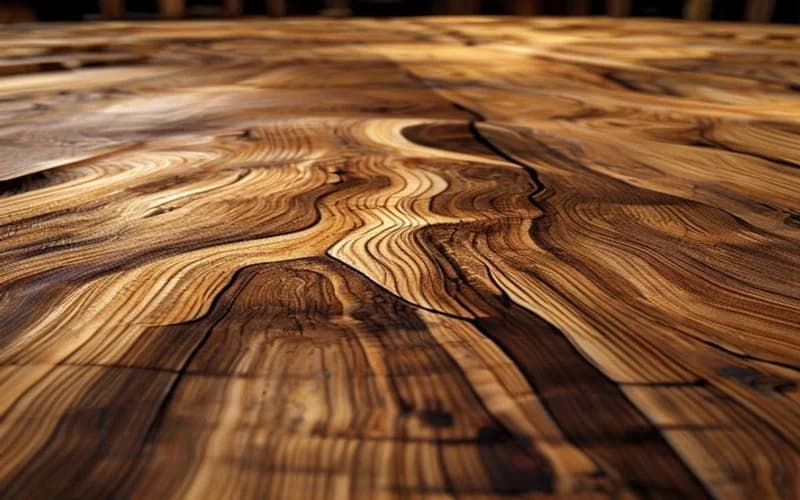
Sapele Plywood: Ribbon Grain Patterns and High-Stiffness Engineering
Sapele is the heavy-duty mahogany alternative. Learn the physics of Sapele plywood, its unique ribbon stripe figure, and how to machine its tough interlocking grain.
Giang Nguyen
Wood Manufacturing Expert
The Heavy Mahogany: Sapele Plywood
Sapele (*Entandrophragma cylindricum*) is a majestic tropical hardwood native to West Africa. Often marketed as a member of the mahogany family due to its rich reddish-brown color, Sapele is actually much harder, heavier, and stiffer than genuine Honduran mahogany. In plywood form, Sapele face veneers are highly sought after for both high-end architectural panels and BS 1088 marine construction.
But Sapele is a challenging wood to master in the shop. It features a tight, interlocking grain pattern that creates beautiful ribbon-stripe figures but makes the wood highly prone to tear-out. Additionally, its high density makes it heavy and hard on cutting tools. Let's explore the material science and shop performance of Sapele plywood.
Ribbon Grain: Slicing the Interlocked Fibers
The signature look of Sapele is its ribbon stripe pattern. This figure is created by the tree's natural growth pattern: the wood fibers spiral around the trunk, changing direction every few years (interlocking grain).
When the log is quarter-sliced, the knife cuts across these alternating spiral bands, exposing wood cells that reflect light in opposite directions. Under a clear finish, this creates a gorgeous pattern of dark and light vertical stripes that shimmer when you move around the panel (chatoyancy). Plain-slicing Sapele yields a more traditional cathedral grain, but quarter-slicing is the standard for highlighting Sapele's unique figure.
Physical and Mechanical Specifications
Sapele is a dense, stiff hardwood. It has a Janka hardness that exceeds red oak, making it exceptionally durable but heavy:
| Property | Sapele Plywood (BS 1088) | Okoume Marine Plywood | Red Oak Veneer Plywood |
|---|---|---|---|
| Density (kg/m³) | **640–680** | 400–440 | 620–680 |
| Janka Hardness (lbf) | **1,410** | 400 | 1,290 |
| MOR (Strength - MPa) | **110** | 65 | 98 |
| MOE (Stiffness - MPa) | **14,500** | 8,500 | 11,200 |
The MOE (Modulus of Elasticity) of Sapele is 14,500 MPa, making it one of the stiffest plywood panels available. If you are building structural yacht bulkheads, heavy office desks, or long display shelves, Sapele core panels will resist deflection far better than standard hardwood or softwood plywood.
[CTA BUTTON: Check Current Price on Amazon]
Machining Sapele: Taming the Tear-out
Sapele's interlocking grain is a double-edged sword. While it creates beautiful ribbon figures, it makes the wood highly vulnerable to tear-out when machining. When your saw blade or router bit cuts through the wood, the fibers that lean against the direction of the cut will pull and tear out rather than shearing cleanly.
To prevent tear-out when routing or sawing Sapele plywood faces:
- Sharp Tooling: Use only freshly sharpened carbide bits. A slightly dull cutter will instantly tear the ribbon fibers, leaving deep pockets on the surface.
- Climb Cutting: When routing edges on a CNC, use a climb-cut strategy (where the cutter rotates in the direction of the feed) for the final pass to shave the fibers down cleanly. Use a zero-clearance backing block on your miter saw to support the exit grain.
- Low Feed Speed: Reduce feed speeds slightly to allow the cutter teeth to shear the wood cleanly rather than lifting the fibers.
Bonding and Gluing Sapele Plywood
Sapele contains natural oils and extractives, though not as much as teak. While it glues easily with standard PVA wood glues for indoor projects, marine applications require careful prep.
For epoxy lamination, sand the joint with 80-grit paper to open the pores, and wipe the surface down with acetone or denatured alcohol to remove any surface oils before applying the adhesive. Sapele's high density means it does not absorb glue as fast as poplar or pine, so you must leave clamps on for the full curing cycle to ensure a secure bond.
Finishing Sapele: Pop the Ribbon Figures
Sapele looks spectacular under a clear finish. Because it is a medium-to-large pore hardwood, you must decide between a textured open-pore look or a glass-smooth closed-pore look.
Open-Pore Satin Finish
Applying Danish oil, tung oil, or a satin polyurethane directly to the wood highlights the natural, rustic texture of Sapele. The oils will penetrate the ribbon grain, deepening the reddish-brown color and emphasizing the chatoyant shimmer.
High-Gloss Piano Finish
For luxury furniture and yacht interiors, a glass-like gloss finish is popular. To achieve this, apply a dark-colored paste wood filler to fill the open pores. Sand the filler flat, then apply multiple coats of high-solids varnish or lacquer, sanding between coats to build a thick, reflective lens over the ribbon grain.
Common Questions
Does Sapele darken like cherry?
Yes, Sapele will oxidize and darken under UV light, moving from a medium reddish-brown to a deep, dark coppery-brown. However, unlike cherry (which darkens rapidly within weeks), Sapele darkens more slowly over several months. Use a UV-blocking clear coat if you want to freeze the color at day-one levels.
What is the difference between Sapele and African Mahogany?
African Mahogany (*Khaya ivorensis*) is lighter in weight, softer (Janka 830 lbf), and has larger pores than Sapele. Sapele is harder, heavier, stiffer, and has a much tighter, more consistent ribbon stripe figure. Sapele is also more durable in marine environments, earning BS 1088 approval far more often than Khaya.
Can I use Sapele plywood for exterior doors?
Yes, Sapele is highly rot-resistant and stable, making it an excellent choice for exterior entry doors. Ensure the plywood panel is stamped with an Exterior or Marine adhesive rating, and seal all edges and joints with a high-quality outdoor varnish or exterior paint.
Bottom Line
Sapele plywood is a premium, high-strength material that offers the gorgeous look of ribbon mahogany with superior stiffness and Janka hardness. Treat its interlocking grain with sharp tools and light passes, and choose a finish that pops its chatoyant stripes for an architectural-grade result.
[CTA BUTTON: Check Current Price on Amazon]
Want to see our testing in action?
Browse our expert-tested standing desk reviews with real lab data.
Explore Reviews