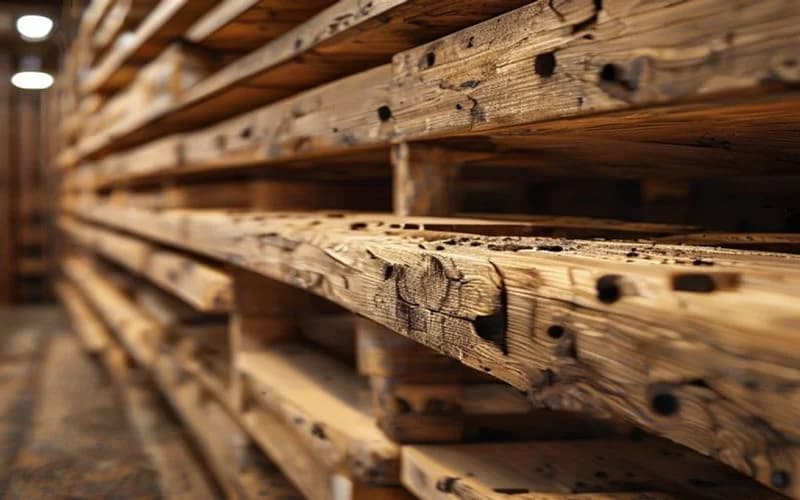
Preventing Mold on Plywood Shelves: Moisture Control and Sealing Protocols
Raw and poorly finished plywood shelves in closets and pantries are magnets for mold. Learn the science of spore mitigation, borate treatments, and vapor barriers.
Giang Nguyen
Wood Manufacturing Expert
The Biology of Mold in Plywood Storage
Plywood shelves in closets, pantries, basements, and laundry rooms are frequently subjected to poor air circulation and elevated humidity. Under these conditions, they become prime targets for mold and mildew colonization. Mold is a fungus that reproduces via microscopic spores floating in the air. For these spores to settle and grow on your plywood, they require three conditions: a temperature between 40°F and 100°F, a source of organic nutrients (wood cellulose), and a source of moisture.
While you cannot remove the organic food source (the plywood itself), you can control the moisture and treat the wood fibers to make them toxic to fungal spores. Let's analyze the relationship between wood moisture content (WMC) and fungal growth, and look at the shop protocols for treating and sealing plywood shelves against mold.
Wood Moisture Content (WMC) and Relative Humidity
Wood is hygroscopic; it absorbs and releases water vapor to reach equilibrium with the surrounding air. The amount of water trapped in the wood cells is measured as Wood Moisture Content (WMC) by weight.
| Relative Humidity (RH) | Equilibrium Moisture Content (EMC) | Mold Risk Level | Fungal Behavior |
|---|---|---|---|
| **Below 50%** | 6% - 9% | Safe (Zero risk) | Spores remain dormant; no growth occurs. |
| **50% - 65%** | 9% - 12% | Low | Minimal risk unless direct condensation occurs. |
| **65% - 80%** | 12% - 16% | Moderate | Fungi can grow if air circulation is stagnant. |
| **Above 80%** | 16% - 28% | High | Rapid mold colonization; structural decay starts above 20% WMC. |
| **Fiber Saturation** | 28%+ | Critical | Active rot and decay fungi thrive; wood structure degrades. |
Mold spores can germinate when the relative humidity at the wood surface remains above 70% for more than 48 hours. If your storage closet or pantry has stagnant air and high humidity, the plywood will absorb moisture until it crosses the 12% WMC threshold, initiating mold growth. The end-grain of exposed plywood plies is especially vulnerable because it absorbs water vapor up to 20 times faster than the face veneers.
[CTA BUTTON: Check Current Price on Amazon]
Chemical Treatments for Mold Mitigation
Before sealing plywood shelves, you can apply chemical preservatives to make the wood inhospitable to mold. The most effective shop-applied treatments are borate compounds.
Borate Wood Preservatives
Disodium octaborate tetrahydrate (DOT) is a natural mineral salt that is highly effective against mold, rot fungi, termites, and wood-boring beetles. It is odorless, has low toxicity to humans and pets, and does not alter the color or strength of the plywood.
- How to mix: Dissolve DOT powder (such as Bora-Care or Tim-bor) in warm water according to the manufacturer's instructions (typically a 1:1 or 1:5 ratio depending on wood thickness).
- Application: Spray or brush the borate solution onto all raw surfaces of the plywood, paying special attention to the raw edges and the underside of the shelves. The water carries the borates deep into the wood cells. Let the plywood dry completely for 24 to 48 hours before finishing. Because borates are water-soluble, they will leach out if exposed to running water, but on interior shelves, they remain locked in the wood indefinitely.
Step-by-Step Sealing Protocol for Mold Prevention
Once the plywood is treated and dry, you must seal it. A raw or oiled plywood shelf is not protected against water vapor. You need a finish that functions as a moisture barrier to prevent water from reaching the cellulose fibers.
Step 1: Thorough Sanding and Dust Removal
Sand the shelves to 150-grit. Sanding creates a clean surface for the paint or sealer to bond to. Do not leave raw edges unsanded. Sand the edge plies smooth to reduce their surface area and block water absorption. Vacuum off all dust.
Step 2: Applying a Mold-Resistant Primer
If the shelves will be painted (common for closet and pantry shelving), apply a dedicated mold-resistant primer containing EPA-registered active fungicides (such as Zinsser B-I-N or Zinsser Mold Killing Primer).
- Use an oil-based or shellac-based primer. Shellac-based primers have the lowest vapor permeability of any sealer, providing an absolute moisture barrier.
- Apply two coats, ensuring the raw edges of the plywood are heavily coated. Let the primer dry completely and sand lightly with 220-grit between coats.
Step 3: Topcoating with a Semi-Gloss or Gloss Paint
Do not leave the primer as the final finish. Primer is porous and designed to hold paint. Apply two coats of a high-quality semi-gloss or gloss acrylic latex or urethane alkyd paint. The glossier the finish, the tighter the polymer structure, which makes it harder for moisture to penetrate and easier to clean. Many modern cabinet paints include anti-microbial additives that inhibit mold growth on the paint film.
Step 4: Clear Finishes for Natural Wood Shelves
If you want to preserve the look of natural plywood (like Baltic birch), do not use simple wax or oil finishes, as they provide very little vapor protection.
- Apply three coats of a high-performance water-based polyurethane or an oil-based polyurethane containing UV and moisture inhibitors.
- Ensure the first coat is thinned slightly to penetrate the plies, and apply the subsequent coats full strength. Coat all six sides of the shelf—top, bottom, and all four edges—to seal the panel uniformly and prevent warping caused by uneven moisture absorption.
Shop Maintenance and Humidity Controls
Even with sealed shelves, mold can grow on surface dust or organic spills (like spilled food in a pantry) if the humidity remains high.
- Maintain Relative Humidity below 55%: Use a dehumidifier in basements or closets.
- Improve Air Circulation: Install slatted plywood shelves rather than solid sheets if airflow is poor, or leave a 1-inch gap between the back of the shelf and the closet wall to allow air to rise.
- Regular Inspections: Periodically wipe down pantry and utility shelves with a diluted solution of white vinegar (which kills mold spores) or a mild soap. Avoid bleach on finished wood as it can degrade the paint film and does not kill mold spores on porous surfaces.
Bottom Line
Preventing mold on plywood shelves requires a combination of humidity control and correct finishing chemistry. Never leave utility plywood raw in damp areas. Treat the wood with borates, seal all sides with a high-build vapor-barrier sealer like shellac or polyurethane, and ensure proper closet ventilation to keep your storage spaces clean and spore-free.
[CTA BUTTON: Check Current Price on Amazon]
Want to see our testing in action?
Browse our expert-tested standing desk reviews with real lab data.
Explore Reviews