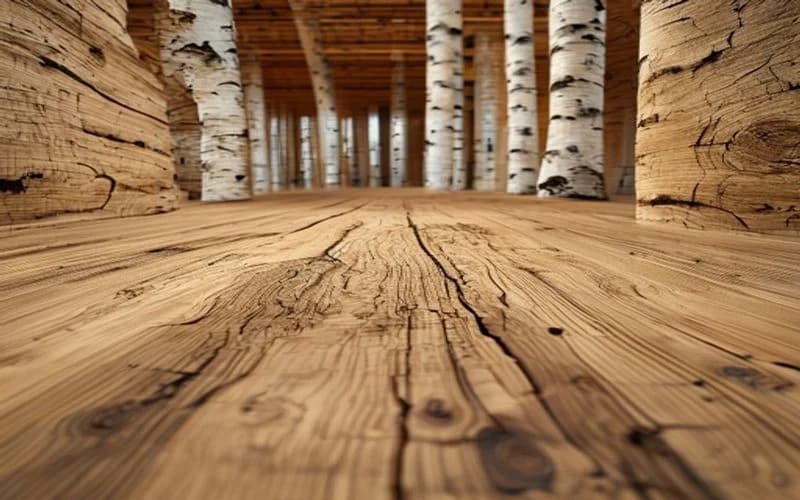
Finnish Birch Plywood: Inside UPM WISA and Boreal Engineering Standards
When Russian birch exited the market, Finnish mills became the gold standard. A deep dive into UPM WISA specifications, boreal forestry, and industrial panel tolerances.
Giang Nguyen
Wood Manufacturing Expert
The Boreal Engine of Premium Ply
Finland is the spiritual home of advanced engineered wood products. In the harsh boreal climate of northern Europe, silver birch (*Betula pendula*) grows slowly, resulting in exceptionally tight growth rings, dense grain structures, and superior mechanical properties. When geopolitical sanctions removed Russian timber from the global market, Finnish mills, particularly UPM Plywood under the WISA brand, became the undisputed gold standard for industrial and cabinet-grade birch plywood.
Unlike standard hardwood plywood, Finnish birch is not merely a utility sheet. It is an engineered panel manufactured to strict European standards (EN 13986 and EN 636) that regulate load-bearing capability, dimensional tolerance, and environmental emissions. If you are building high-end fixtures, architectural panels, or CNC-machined furniture, you need to understand the technical specifications of Finnish birch to utilize its full potential.
Technical Specifications of UPM WISA-Plywood
UPM WISA panels are characterized by their consistent ply layup, weather-resistant glue lines, and tight manufacturing tolerances. The table below outlines the mechanical properties of WISA-Birch panels:
| Nominal Thickness (mm) | Plies (Count) | Average Density (kg/m³) | Bending Strength (f m, | - N/mm²) | Bending Stiffness (E m, | - N/mm²) | Edge Screw Holding (N) | Thickness Tolerance (mm) |
|---|---|---|---|---|---|---|---|---|
| 6.5 | 5 | 680 | 46 | 9,500 | 750 | +0.3 to -0.4 | ||
| 9 | 7 | 680 | 44 | 9,300 | 850 | +0.3 to -0.5 | ||
| 12 | 9 | 680 | 42 | 9,000 | 950 | +0.4 to -0.6 | ||
| 15 | 11 | 680 | 40 | 8,800 | 1,020 | +0.4 to -0.7 | ||
| 18 | 13 | 680 | 38 | 8,500 | 1,080 | +0.5 to -0.8 | ||
| 21 | 15 | 680 | 36 | 8,200 | 1,120 | +0.5 to -0.9 | ||
| 24 | 17 | 680 | 34 | 8,000 | 1,180 | +0.6 to -1.0 |
Note the relationship between thickness and ply count. An 18mm (nominal 3/4") WISA panel contains 13 identical cross-laminated plies. This high ply count ensures that the panel remains exceptionally flat and resists sagging under load. The bending strength ($f_{m,||}$) and bending stiffness ($E_{m,||}$) parallel to the face grain are nearly double that of domestic softwood cores.
Advanced Adhesive Chemistry: BioForestry in Action
One of the most significant engineering milestones in Finnish birch production is the development of lignin-based adhesives. Traditional WBP (Weather and Boil Proof) plywood relies on phenol-formaldehyde (PF) resins derived from fossil fuels. UPM WISA panels utilize UPM BioVibe technology, which replaces up to 50% of the petroleum-based phenol in the adhesive with natural lignin extracted from wood pulp byproducts.
This chemical shift achieves several critical performance and safety goals:
- Waterproof Performance: The lignin-fortified phenolic bond passes all EN 314-2 Class 3 requirements, meaning it will not delaminate under continuous boiling or outdoor exposure.
- Ultra-Low Emissions: WISA panels easily meet CARB Phase 2 and EPA TSCA Title VI standards, releasing less than 0.03 ppm of formaldehyde, which is comparable to the background level of raw, unfinished timber.
- Laser Processing Advantages: The reduced phenolic resin content reduces charring and toxic gas release during laser cutting, allowing for cleaner cuts with less soot.
[CTA BUTTON: Check Current Price on Amazon]
Machining Finnish Birch in the Woodshop
Finnish birch is a joy to cut, but its high density and tough phenolic glue lines require respect. If you treat it like domestic fir plywood, you will burn your bits and splinter the face veneers.
When processing WISA panels on a CNC router:
- Use Compression Tooling: Always use a compression bit (up-cut/down-cut spiral). The down-cut portion of the bit pushes the top veneer fibers downward, while the up-cut portion pulls the bottom fibers upward. This prevents tear-out on both faces.
- Adjust Feed Rates: Lower your feed rate compared to cutting MDF or poplar. Finnish birch is dense (680 kg/m³), and pushing the tool too fast will cause tool deflection, resulting in out-of-square cuts and premature tool breakage.
- Control Heat: Phenolic glue is abrasive. If you run your spindle speed too high relative to your feed rate, you will rub rather than cut, generating heat that ruins the carbide edge. Keep your chips thick and your cuts cool.
When edge-routing, the exposed multi-ply edge of Finnish birch is a key design element. To keep this edge looking clean, sand it progressively up to 320-grit and seal it with a clear polyurethane or oil finish. The alternating end-grain and face-grain layers will pop, creating a striking linear highlight.
Bottom Line
Finnish birch plywood from UPM WISA represents the pinnacle of boreal wood engineering. Its combination of tight tolerances, eco-friendly adhesive chemistry, and high mechanical strength justifies its price premium. For architectural installations and furniture projects where performance and aesthetics cannot be compromised, accept no substitutes.
[CTA BUTTON: Check Current Price on Amazon]
Want to see our testing in action?
Browse our expert-tested standing desk reviews with real lab data.
Explore Reviews