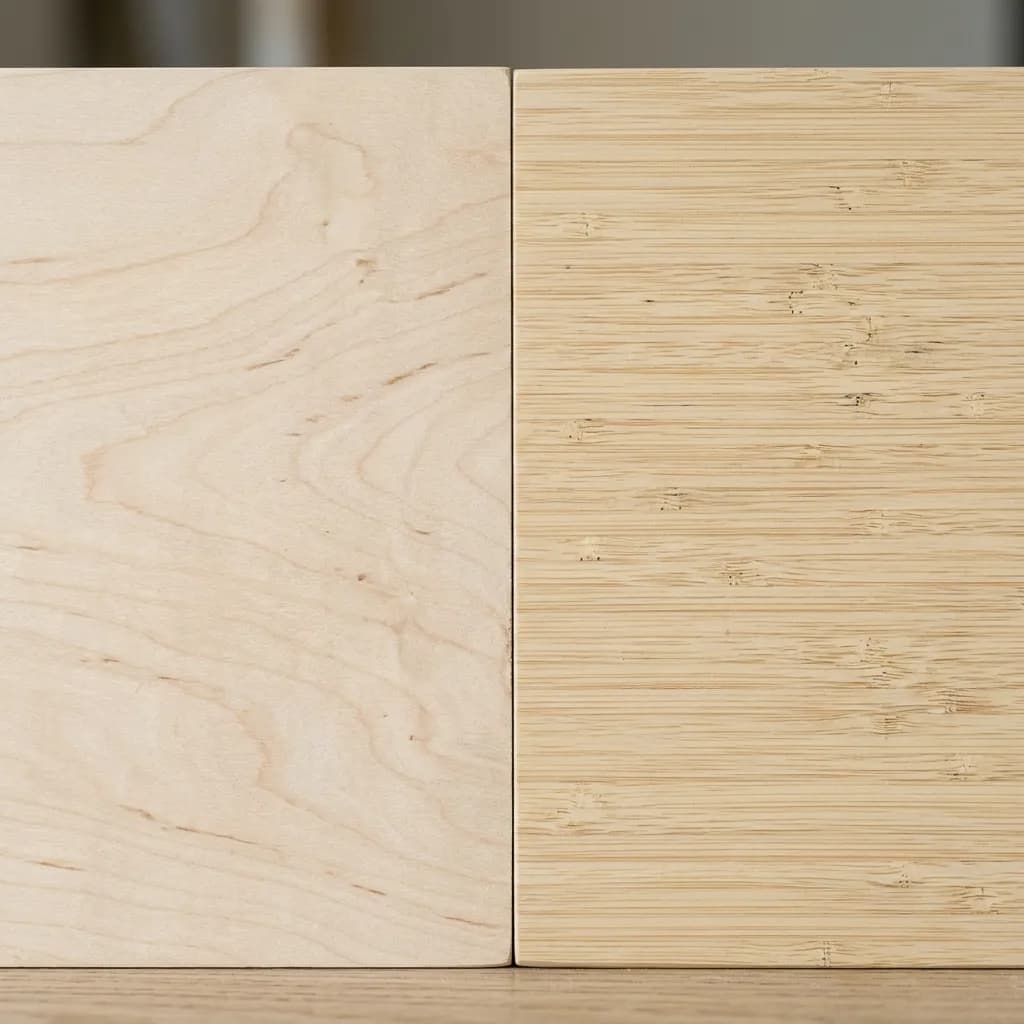
Bamboo vs Birch: The Definitive Material Showdown
Two of the most popular desk materials compared across density, sustainability, price, and durability.
Giang Nguyen
Wood Manufacturing Expert
The Two Titans of Sustainable Tableware & Desks
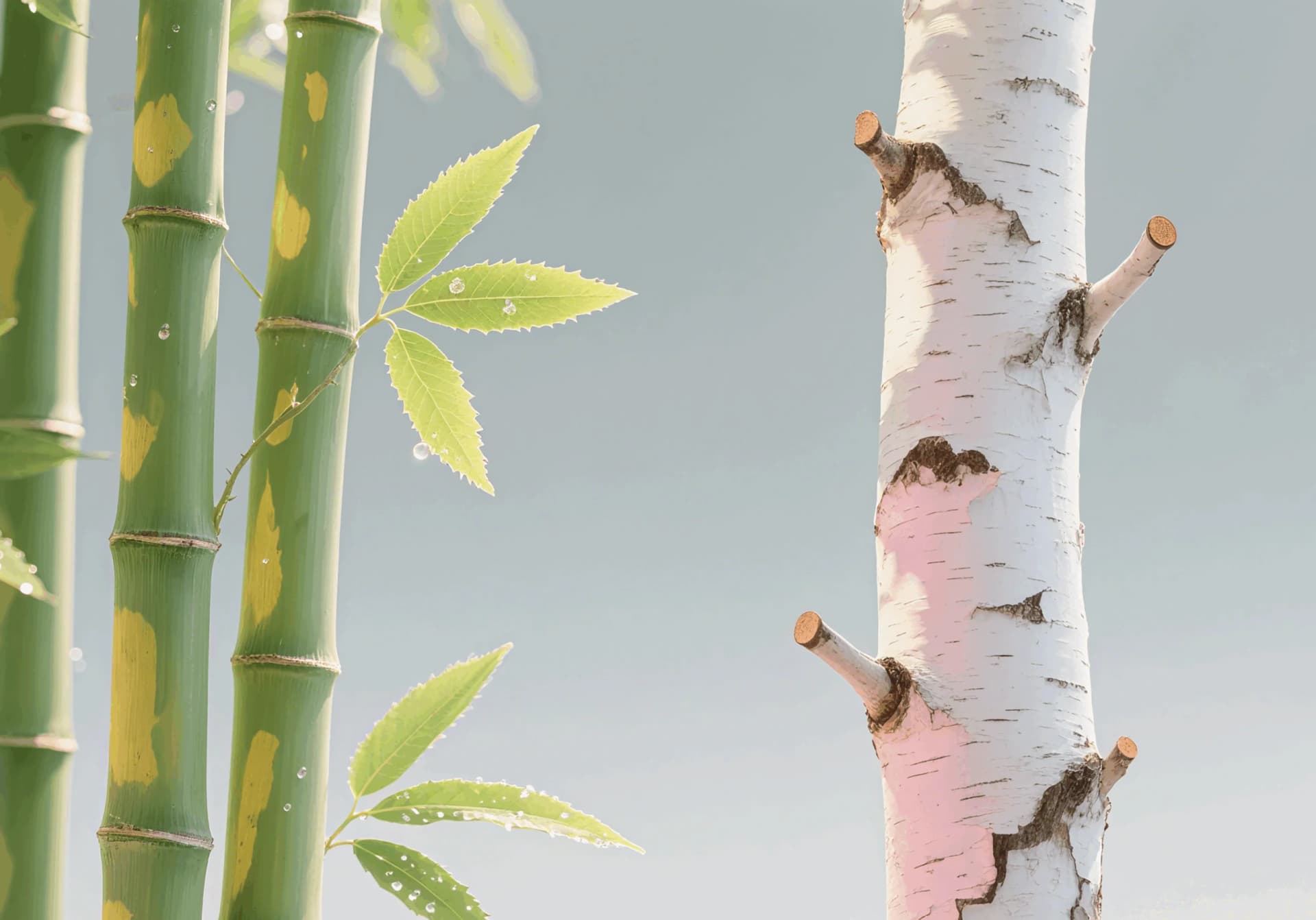
Bamboo vs Birch Comparison
In the global movement to reduce plastic waste and seek sustainable materials for both tableware and furniture, birch and bamboo stand out for their renewable nature and biodegradability. This guide offers a clear comparison of birch vs bamboo to help you choose the best sustainable solution for your needs.
Birch Wood: The Classic Hardwood
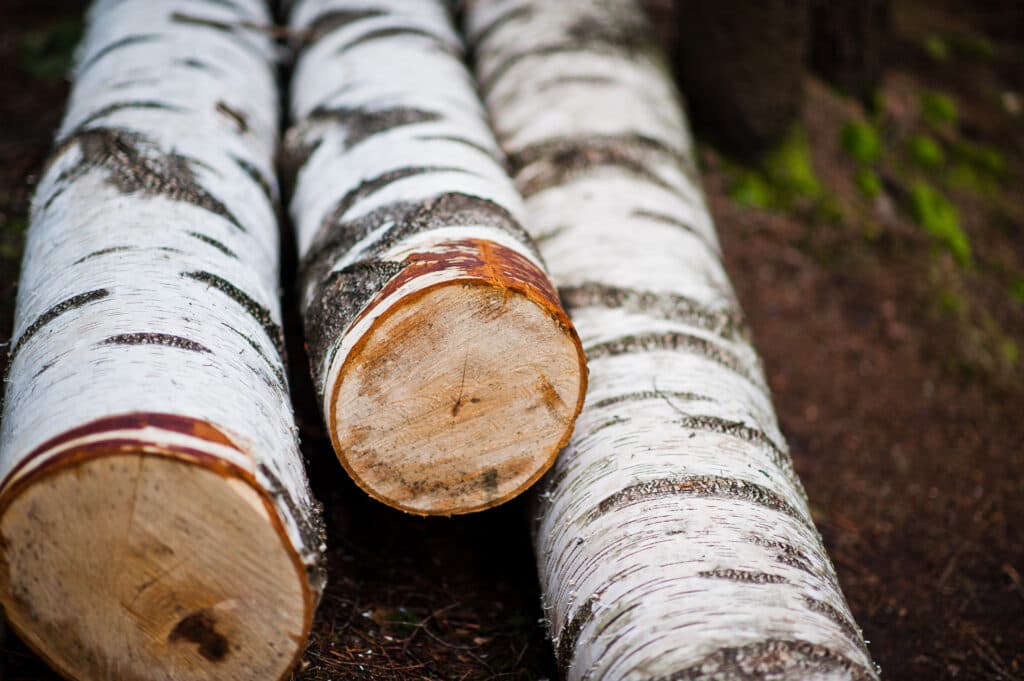
Birch Tree Forest
Birch is a light-colored deciduous hardwood with a fine, uniform texture that machines exceptionally well. It has an excellent strength-to-weight ratio, making it both durable and lightweight.
Material Properties
- Solid wood material with a fine, even grain pattern
- Light color appearance
- Naturally odorless and neutral
- Sustainably Sourced: Birch is fast-growing and widely available in managed forests, supporting responsible forestry practices.
- Smooth Surface: Naturally dense fiber structure ensures a smooth finish, splinter-free.
Bamboo: The Rapidly Renewable Grass
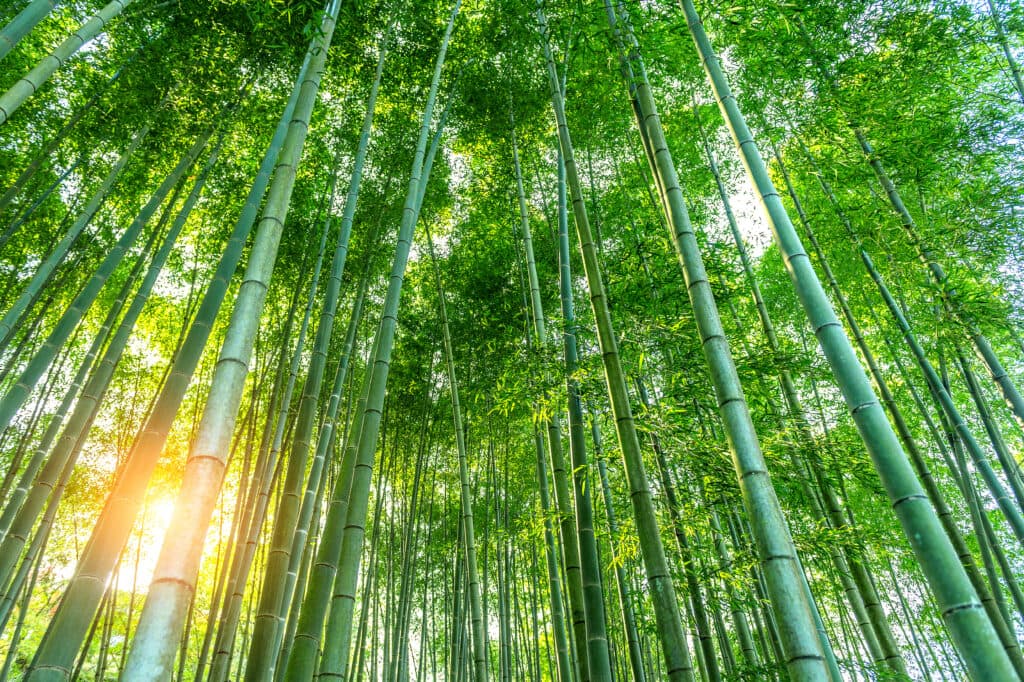
Bamboo Forest
Bamboo is not wood but a giant, fast-growing grass with exceptional tensile strength. Its fibrous structure makes it harder than many hardwoods while remaining lightweight.
Material Properties
- Hollow stem structure with dense fiber composition
- Natural antimicrobial properties (bamboo kun)
- Exceptional hardness and extreme durability
- Rapidly Renewable Resource: Bamboo grows extremely fast (harvestable in 3–5 years), making it one of the most sustainable raw materials.
- Low Environmental Impact: Requires minimal water, no pesticides, and regenerates naturally after harvesting.
Head-to-Head Comparison
| Feature | Birch Wood | Bamboo |
|---|---|---|
| :--- | :--- | :--- |
| **Material Source** | Deciduous tree (Hardwood) | Fast-growing grass |
| **Growth Cycle** | Decades | 3-5 Years (Highly Renewable) |
| **Density & Hardness** | 620-680 kg/m³ (1,260 lbf Janka) | 600-700 kg/m³ (1,380 lbf Janka) |
| **Aesthetic** | Classic, natural wood grain | Modern, linear fiber pattern |
| **Special Properties** | Splinter-free, neutral taste/odor | Naturally antimicrobial, water-resistant |
Which Should You Choose?
Choose Birch When:
- You prefer a neutral, classic natural wood appearance.
- You need high strength and excellent dimensional stability.
- Printing and branding (e.g., on tableware) are important.
Choose Bamboo When:
- Maximum sustainability and rapid renewability are your top priorities.
- You want distinctive aesthetics with natural fiber patterns.
- Natural antimicrobial properties are important.
- You need extra durability and surface hardness.
Both materials offer biodegradable, renewable, and environmentally responsible alternatives to traditional materials, significantly reducing environmental footprint while meeting modern expectations.
Want to see our testing in action?
Browse our expert-tested standing desk reviews with real lab data.
Explore Reviews